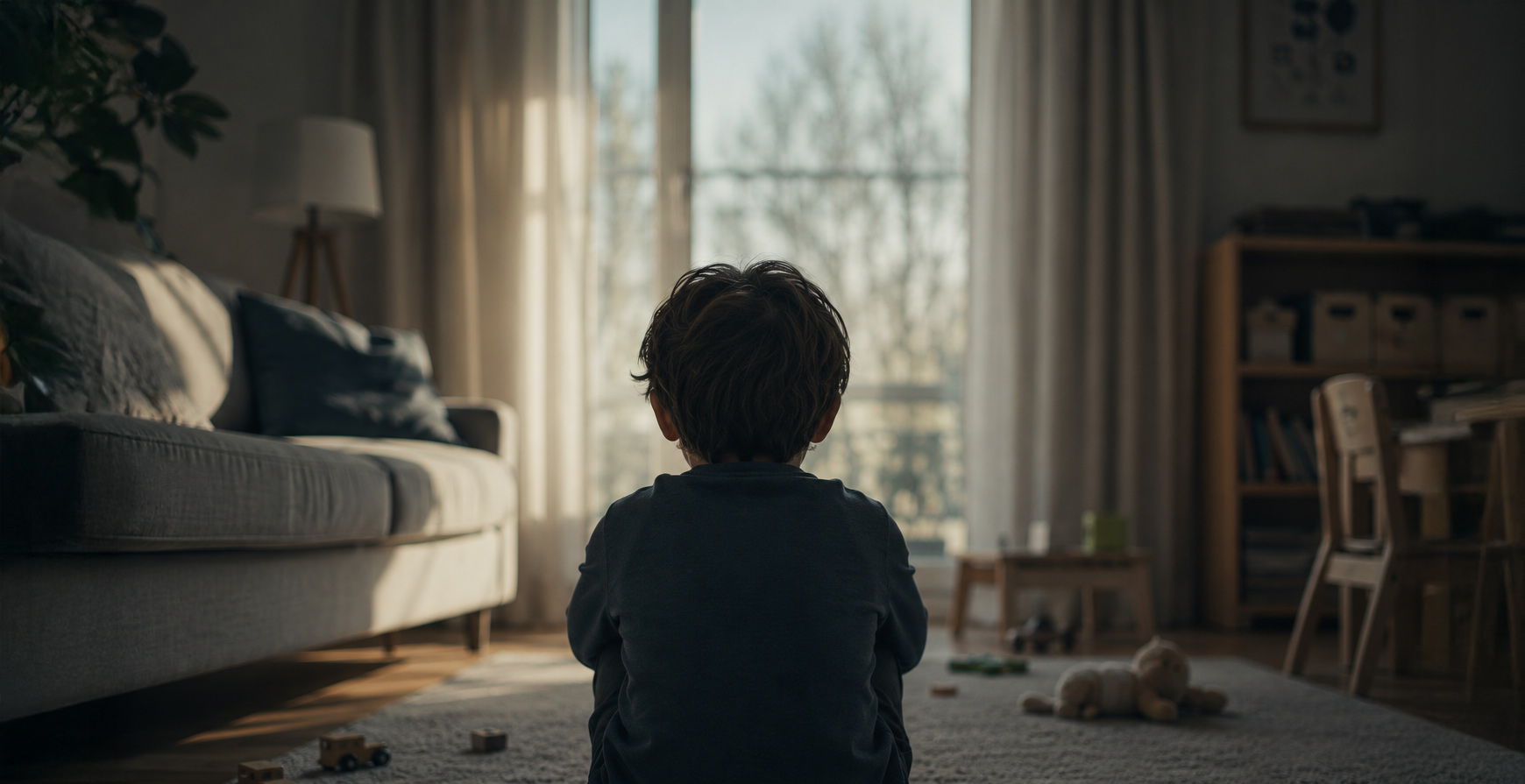
What Children's Brains Are Actually Doing
Human brains are shaped by their social environment to an extraordinary degree. Emotional regulation develops through 'co-regulation': when caregivers consistently respond to infant distress with calm, attuned presence, the infant's nervous system learns what regulation feels like. Over thousands of repetitions, this becomes the child's template for self-regulation. When caregivers are dysregulated, the template becomes: the world is threatening, and regulation is hard to achieve.
Mirror Neurons and Emotional Contagion
Mirror neurons fire both when we perform an action and when we observe someone else performing it. When children watch parents respond to stress, their brain simulates and internally rehearses it. Research shows young children's stress hormone levels (cortisol) track with their caregivers' stress levels in real time. Your nervous system state is contagious to your child.
The Research on Parental Emotion and Child Outcomes
Longitudinal studies: maternal anxiety/depression in early childhood predicted higher child anxiety/depression by age 10, difficulty with peer relationships, greater emotional reactivity, more behavioral problems. The mechanism: quality of modeled emotional regulation was a stronger predictor than genetic vulnerability. This is about overall patterns ('good enough' parenting), not one bad day.
Attachment Patterns: The Long Shadow
Securely attached children (~60%) develop sense that the world is safe, people are trustworthy, needs will be met, distress is manageable. Insecurely attached children develop: world is unpredictable/threatening, closeness is desperately needed or dangerous. These patterns persist into adulthood, affecting relationships, parenting, workplace dynamics, mental health. Meta-analysis: insecure attachment associated with higher anxiety/depression, relationship difficulties, substance abuse, lower academic achievement.
When Parents Are Struggling
77% of adults reported stress-related physical symptoms in past month (APA 2023). Parents dealing with economic insecurity, relationship conflict, grief, health problems, job stress, social isolation, or trauma history find their regulation capacity exceeded by demands. This isn't moral failure; it's capacity issue. Result: snapping at children, feeling emotionally numb, struggling to be present.
The Cycle That Repeats
Unregulated parents raise children who struggle with regulation. Those children become adults who struggle. Those adults become parents who struggle. Without intervention, trauma and dysregulation transmit across generations. Research shows children of anxious parents become anxious adults through both genetic vulnerability and learned patterns.
What Actually Helps
Parent-Child Interaction Therapy (PCIT), Mindfulness-Based Parenting, Trauma-Informed Parenting Support. Common thread: these programs help parents develop their own regulation capacity first. You cannot teach what you have not learned. You cannot model what you do not possess.
The Hope
Emotional regulation is learnable at any age through neuroplasticity. Adults can develop regulation skills they didn't learn in childhood. It's harder than learning young, but entirely possible. Parents who invest in their own healing often become more attuned, more patient, more present than they would have been without that growth. The work you do on yourself is the work of parenting — the deepest and most important part.
Your children are watching. The template you provide is shaping the adults they will become. The work you do on yourself is the work of parenting.