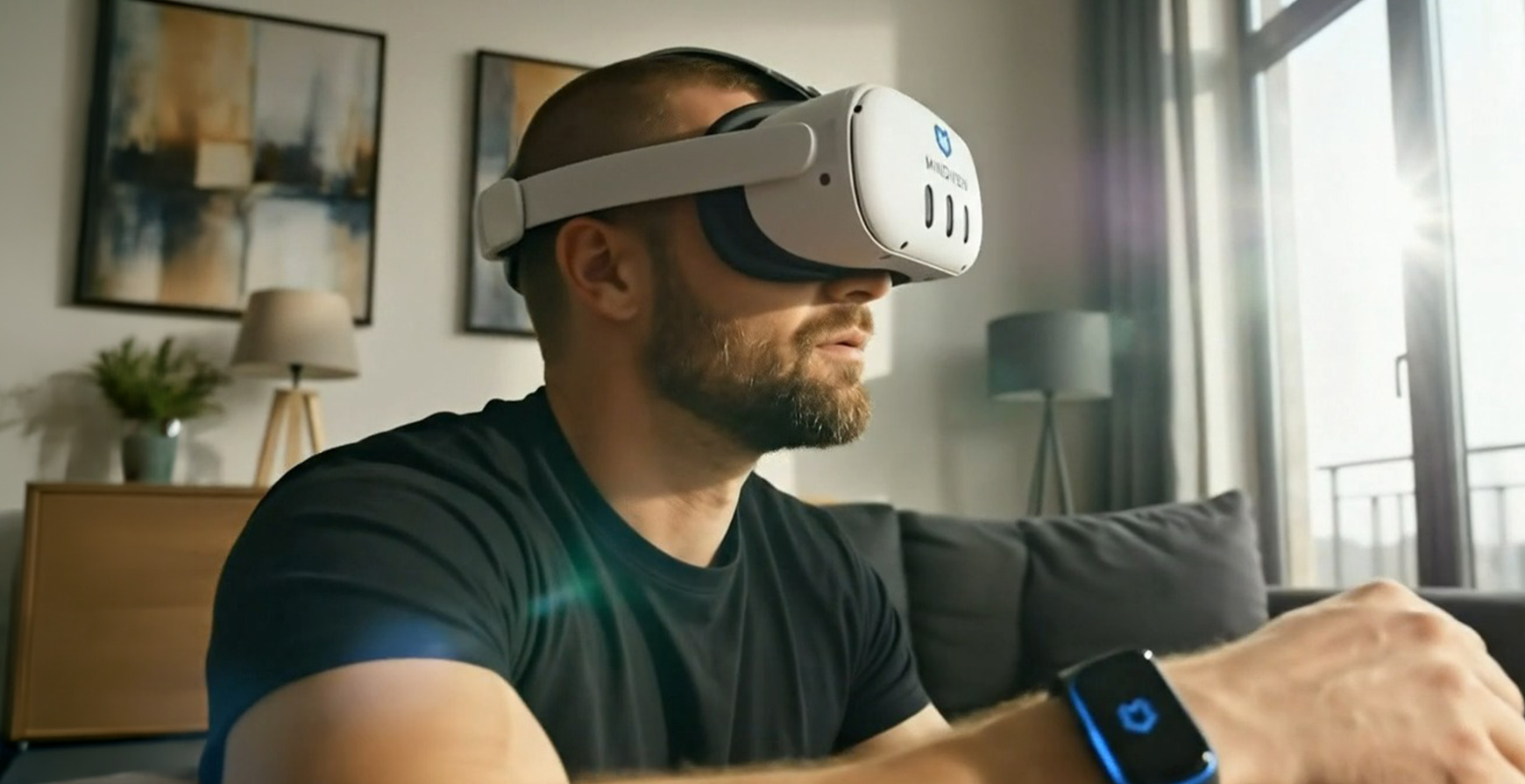
The Core Mechanism: Why VR Works for Mental Health
VR creates 'presence' — the psychological sense of 'being there' in the virtual environment. Your rational mind knows it's simulated. But your emotional and physiological systems respond as if it's real. Heart rate increases. Palms sweat. The amygdala activates. This is precisely what makes VR therapeutically powerful: it can trigger genuine emotional responses in controlled, safe environments.
The Research: Where VR Has Proven Effective
PTSD Treatment: Multiple randomized controlled trials show VR exposure therapy produces significant PTSD symptom reduction. Skip Rizzo's work at USC demonstrated 75-80% of veterans showed clinically meaningful improvement. Phobia Treatment: VR exposure for specific phobias (heights, flying, spiders) shows success rates of 70-90%. Social Anxiety: VR-based social skills training and exposure shows comparable outcomes to in-vivo exposure. Pain Management: VR distraction during medical procedures reduces pain perception by 30-50%.
Why VR Works Better Than Imagination
Traditional exposure therapy asks patients to imagine feared scenarios. VR doesn't require imagination — it creates the scenario. This produces stronger emotional activation, which is essential for fear extinction and new learning. Patients can't avoid or escape mentally (as they can with imagination). The environment is consistent across exposures. Therapists can control the stimulus precisely.
The Accessibility Revolution
Ten years ago, VR required $50,000 equipment and dedicated lab space. Today, consumer VR headsets cost $300-500. Standalone devices require no computer. Processing power has increased exponentially. This means VR-based interventions can move from research labs into clinics, homes, and community settings.
The Gap: Clinical Applications vs. Everyday Stress
Most VR mental health applications target specific clinical conditions: diagnosed PTSD, specific phobias, clinical anxiety disorders. Very few address the broader population: people with stress, emotional dysregulation, subclinical anxiety, or trauma responses who need skill-building but don't have diagnoses. This is the white space — VR's proven mechanisms applied to skill training for non-clinical populations.
VR isn't the future of mental health intervention. It's the present. The question is whether it will remain confined to clinical settings treating diagnosed disorders — or whether it will expand to help millions learn emotional regulation skills they need but can't currently access.