No one is actually in danger. But the trainee's nervous system doesn't fully know that. The stress is real. The learning is real. And when this pilot eventually faces an actual emergency at 30,000 feet, the procedures will be muscle memory, not a desperate attempt to recall information from a textbook.
We've known for decades that simulation-based training is superior to classroom instruction for high-stakes, high-stress skills. The question is: why haven't we applied this insight to emotional regulation training?
Where Simulation Training Is Already Standard
Across high-stakes professions, simulation has become not just common but mandatory:
- Aviation: Pilots spend hundreds of hours in flight simulators before flying actual passengers. The FAA requires specific simulator training for virtually all commercial certifications.
- Medicine: Surgical residents practice procedures on high-fidelity mannequins and virtual reality systems before operating on patients. Studies show simulation-trained surgeons make 30-40% fewer errors.
- Military: Soldiers conduct combat simulations, war games, and scenario-based exercises repeatedly before deployment. The U.S. military invests billions in simulation technology.
- Emergency response: Firefighters, paramedics, and police officers train in simulated emergency scenarios — from mock disaster sites to active shooter drills.
These aren't luxury investments. They're recognition that when stakes are high and stress is inevitable, practice in realistic conditions is the only reliable preparation.
The Research: Why Simulation Works Better Than Classroom Learning
A 2011 meta-analysis published in Medical Education examined 609 studies comparing simulation-based training to traditional instruction. The findings were decisive:
- Simulation training showed large positive effects on knowledge, skills, and behaviors
- Skills learned in simulation transferred to real performance
- Retention was significantly better than lecture-based learning
- The most effective simulations included feedback, repetitive practice, and progressive difficulty
Why does simulation work so well?
- 1Experiential learning activates multiple memory systems. When you physically execute a procedure while experiencing realistic stress, you're encoding the skill in motor memory, emotional memory, and procedural memory — not just declarative memory.
- Stress inoculation builds resilience. Controlled exposure to performance anxiety in a safe environment teaches the nervous system that arousal doesn't equal danger. Heart rate increases, but you learn you can still function.
- Error-based learning is possible. In simulation, mistakes have consequences (failed scenario) but not catastrophic ones (crashed plane, dead patient). This allows learners to fail safely and adjust.
- Repetition without real-world constraints. You can practice the same emergency scenario 50 times in simulation. In real life, you might encounter it once in your career — or never.
- Immediate, objective feedback. Simulators provide data on performance: response time, accuracy, physiological state. You know whether you're improving.
The Transfer Problem: From Simulation to Real World
The critical question for any training: does performance in the training environment transfer to the actual environment?
For simulation, the answer is overwhelmingly yes — when the simulation is well-designed.
Research on 'transfer of training' identifies key factors that maximize real-world application:
Physical fidelity: How closely the simulation matches the real environment (cockpit layout, surgical tools, etc.)
Psychological fidelity: How closely the emotional and cognitive demands match reality (time pressure, consequences, stress)
Functional fidelity: How closely the required behaviors match what you'll actually do (same decision-making processes, same physical actions)
The most effective simulations maximize all three.
The Emotional Regulation Gap: Why We Don't Simulate What Matters Most
We simulate emergencies to prepare pilots, soldiers, surgeons, and emergency responders. These are life-and-death situations where performance under pressure is essential.
But here's what we don't simulate:
- Emotional regulation during conflict with a partner
- Staying grounded during a panic attack
- Managing anxiety before a presentation
- Preventing dissociation when triggered by trauma reminders
- Maintaining composure when receiving criticism
This is paradoxical. Most people will never need to land a plane with failed engines. But virtually everyone will need to regulate their emotions during interpersonal conflict, performance anxiety, or moments of fear.
We've built elaborate simulation infrastructure for rare, high-stakes professional scenarios. We've built almost nothing for common, high-stakes emotional scenarios.
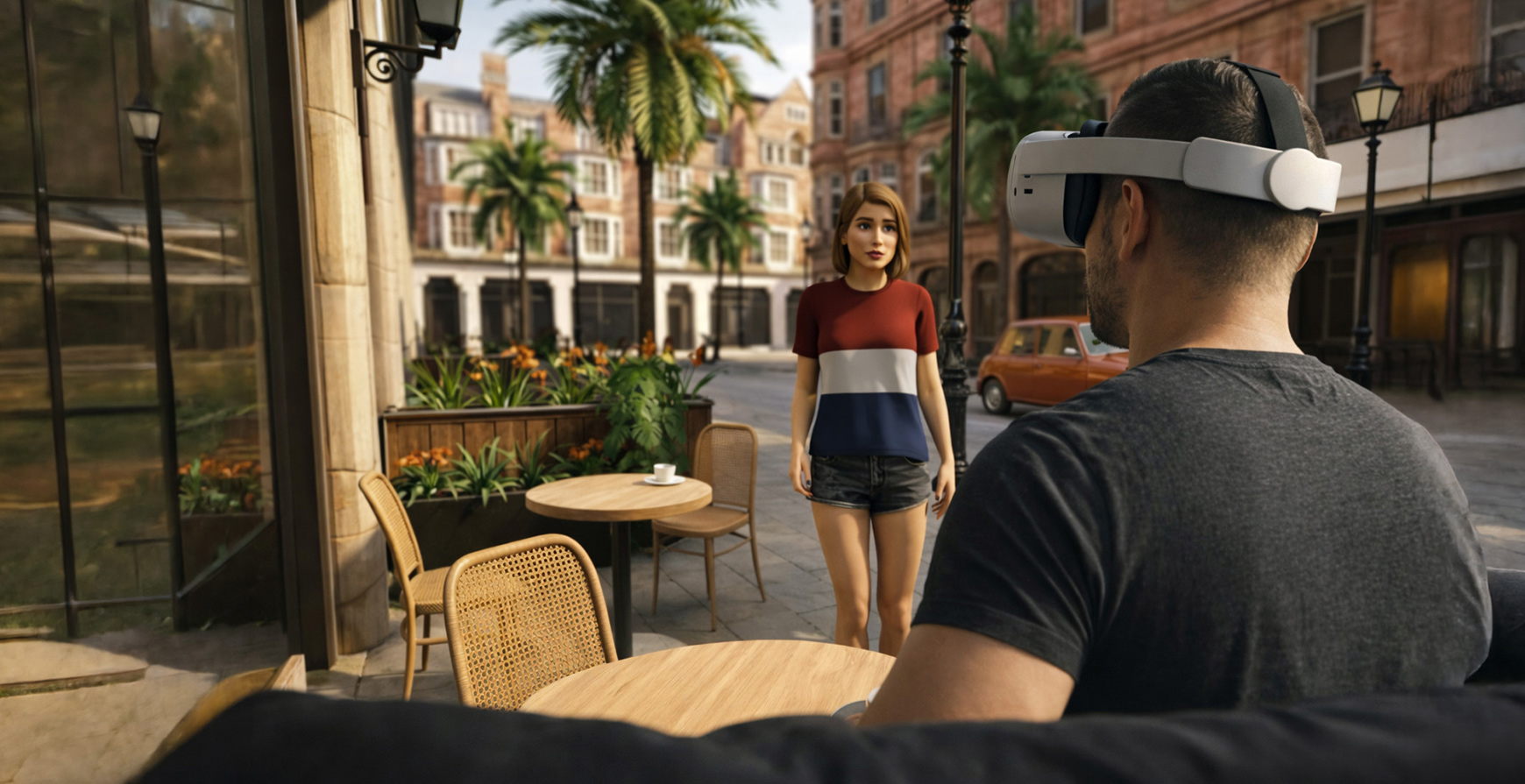
What Emotional Regulation Simulation Would Look Like
Applying simulation principles to emotional skill training would require:
- Realistic stress induction: Environments that trigger genuine physiological arousal (elevated heart rate, cortisol release, muscle tension)
- Safe containment: The ability to pause, reset, or exit when arousal exceeds the person's current regulation capacity
- Progressive difficulty: Starting with mild stressors and gradually increasing intensity as regulation skills develop
- Real-time biometric feedback: Showing whether regulation attempts are working (heart rate decreasing, breathing slowing, HRV improving)
- Repetition: Practicing the same scenario multiple times until regulation becomes automatic
- Personalization: Adapting scenarios to individual triggers, fears, and stress responses
This type of training environment doesn't exist in accessible form. But there's no theoretical or technological reason it couldn't.
The Question We Should Be Asking
We accept that learning to fly requires flight simulators. We accept that learning surgery requires surgical simulators. We accept that preparing for combat requires combat simulations.
Why don't we accept that learning to regulate emotions under stress requires practicing regulation under simulated stress?
The same principles that make simulation effective in aviation, medicine, and military training apply to emotional skill development:
- Experiential learning creates procedural memory
- Practice under arousal builds stress inoculation
- Safe failure enables error-based learning
- Repetition without real-world constraints accelerates skill development
- Objective feedback guides improvement
The gap isn't in understanding what would work. The gap is in building it.
Simulation-based training has revolutionized how we prepare people for physical high-stress performance. It's time to apply the same rigor to emotional high-stress performance.