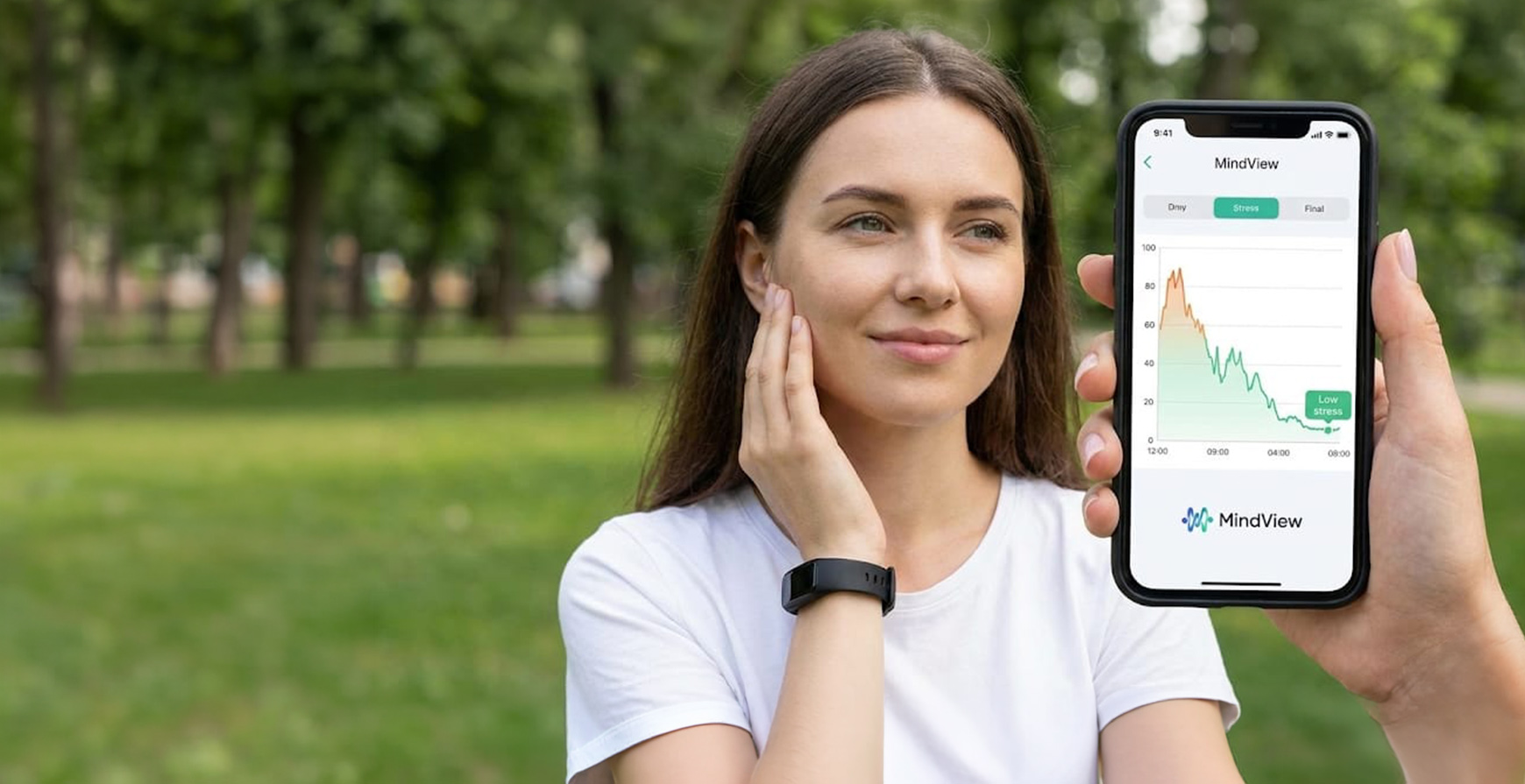
The mental wellness app market is booming. Valued at over $5 billion in 2023 and projected to reach $17 billion by 2030, these apps promise to make mental health support accessible, affordable, and stigma-free.
Some of that promise is real. Much of it is not. And understanding the difference matters if you're one of the millions of people trying to cope with anxiety, stress, or trauma and wondering if an app can actually help.
What the Research Actually Shows: The Good News
Let's start with what works, because dismissing all mental health apps would be unfair and inaccurate.
A 2019 meta-analysis published in the Journal of Medical Internet Research examined 18 randomized controlled trials of smartphone apps for depression and anxiety. The findings showed small to moderate reductions in symptoms compared to control groups.
Mindfulness-based apps — particularly Headspace and Calm, which have invested heavily in research — show evidence for reducing mild to moderate anxiety and stress. A 2018 study in JMIR Mental Health found that 10 days of Headspace use was associated with 14% reduction in stress in a sample of 238 adults.
Cognitive Behavioral Therapy (CBT)-based apps like MoodGYM and Sanvello have demonstrated effectiveness in reducing symptoms of depression and anxiety in multiple studies. These apps teach specific cognitive restructuring techniques and behavioral activation strategies with structured lessons.
For people with mild symptoms, good technological literacy, and the motivation to engage regularly, these apps can be genuinely helpful. They're certainly better than nothing, which is often the alternative.
The Engagement Problem: When Apps Collect Dust
Here's where the research gets less encouraging. The same meta-analysis that found symptom reduction also found something troubling: engagement rates drop sharply after the first week of use.
A 2020 study analyzing real-world usage data from mental health apps found that:
- The median user opened the app fewer than 10 times total
- Over 70% of users abandoned the app within one month
- Only 3% of users were still active after 90 days
This is the wellness app graveyard: downloaded with good intentions, used a handful of times, then forgotten. The apps that showed effectiveness in clinical trials required consistent engagement over weeks or months. Real-world users rarely sustain that level of use.
The Personalization Gap: One-Size-Fits-None
Most mental health apps deliver the same content to everyone. You complete an initial questionnaire, maybe get sorted into 'anxiety' versus 'depression' tracks, and then receive standardized lessons.
But anxiety isn't a monolithic experience. Someone whose anxiety manifests as panic attacks needs different tools than someone whose anxiety manifests as chronic worry. Someone with trauma-related hypervigilance needs different approaches than someone with social anxiety.
Generic content feels generic. When an app tells you to 'practice deep breathing' for the hundredth time, without any acknowledgment that deep breathing hasn't been working for you, without any adaptation to your specific stress profile or triggers, engagement understandably drops.
A 2021 study in Digital Health found that personalized interventions showed 40% better adherence than standardized content. But few apps actually personalize beyond surface-level categorization.
The Context Problem: Practicing in Your Bedroom Won't Help at Work
Here's a fundamental limitation: most wellness apps are used in passive, low-stress environments. You're lying in bed, or sitting on your couch, or commuting on the train. Your nervous system is relatively calm.
Then you encounter actual stress — a difficult conversation at work, a conflict with your partner, an unexpected bill, a triggering news event — and the techniques you 'learned' in the app are suddenly inaccessible.
The disconnect between where you learn and where you need to perform is enormous.
This is the problem discussed in the earlier article on the practice gap: you cannot think your way into emotional regulation. You have to practice under conditions that approximate real stress. Apps that have you do breathing exercises while relaxed in your bedroom aren't training you for the moments that actually matter.
The Measurement Problem: Feelings Versus Function
Most wellness apps measure self-reported mood: 'How are you feeling today? Rate your anxiety 1-10.'
This captures subjective experience but not functional capacity. You can feel slightly better after a meditation session and still be unable to regulate your nervous system during an actual stressful event. You can report improved mood while your actual stress response patterns remain unchanged.
Very few apps measure outcomes that matter: Did you handle a difficult conversation differently? Were you able to fall asleep despite worry? Did you notice your stress response earlier and intervene successfully? These are the metrics that reflect genuine skill development, and they're almost never tracked.
The Passive Consumption Problem: Listening Isn't Learning
Many popular wellness apps are essentially content delivery systems: audio meditations, articles about mindfulness, sleep stories, calming music.
Consuming this content can feel good in the moment. It's soothing. It's pleasant. But it's fundamentally passive.
Consuming content about coping is not the same as developing the capacity to cope.
Research on learning and skill development is clear: passive consumption produces minimal behavior change. Active practice, immediate feedback, progressive challenge, and real-world application are what create lasting capability.
Most wellness apps deliver information and inspiration. Very few deliver structured skill training.
The 'Better Than Nothing' Trap
When people point out these limitations, app advocates often respond: 'But it's better than nothing! If someone can't access therapy, isn't an app better than no support at all?'
This framing is understandable but problematic. It accepts the false binary that the only options are expensive one-to-one therapy or passive wellness apps. It obscures the possibility of other approaches that could actually bridge the gap: accessible, engaging, genuinely skill-building interventions that produce measurable improvements in real-world functioning.
The 'better than nothing' standard also allows apps to collect millions in revenue while delivering minimal lasting benefit. If 97% of users abandon the app within three months and the 3% who remain see only modest symptom reduction, is that really better than nothing? Or is it a distraction from building solutions that actually work?
What Would Actually Work Better
The research on effective digital mental health interventions points to consistent themes:
- Genuine personalization: Systems that learn individual stress patterns and adapt content accordingly
- Active skill training: Structured practice with progressive challenge, not passive content consumption
- Real-world context: Practice under conditions that approximate actual stress, not just calm environments
- Objective measurement: Tracking actual behavioral and physiological change, not just self-reported mood
- Sustained engagement: Design that maintains user involvement long enough for skills to develop
These elements exist in some digital therapeutic applications — FDA-authorized, clinically validated digital treatments. But they're largely absent from the consumer wellness app market.
So do wellness apps help people cope? The honest answer is: sometimes, for some people, to a modest degree, temporarily.
That's not nothing. But it's not nearly enough.
The real question is whether we're satisfied with 'not nothing' — or whether we're willing to demand better.